Rotating shifts are a work schedule model in which employees regularly switch between different shifts, such as early, late and night shifts. This creates clearly defined routines while helping distribute workloads evenly and maintain continuous operations. This rotating shift pattern is particularly common in businesses that operate a 24/7 shift schedule.
Rotating Shifts: Making Shift Rotations Easy to Implement

In today’s modern workplace, work-life balance and fair workload distribution are becoming increasingly important. That’s why rotating shifts have become essential in many industries. They are especially common in businesses that need continuous staffing, such as hospitals, manufacturing facilities and call centers. Their cyclical structure offers clear benefits for both businesses and employees, but it also brings challenges.
Content
What Are Rotating Shifts?

Here’s how a rotational work schedule compares with a fixed shift schedule:
| Aspect | Rotating shift schedule | Fixed shift schedule |
| Shift changes | Regular rotation between early, late and night shifts, for example | Employees always remain on the same shift |
| Workload | Less desirable working hours are distributed fairly | Fewer employees carry a heavier burden |
| Flexibility | Ideal for changing operational requirements | Limited adaptability |
In everyday operations, rotating shifts can improve employee satisfaction and efficiency, particularly by reducing conflicts caused by shifts employees may not want to work.
How Does a Rotating Shift Schedule Work?
A rotating shift schedule is based on recurring rotation patterns that help ensure employees are assigned shifts transparently and fairly. The cycle may restart weekly or monthly, depending on the business’s needs.
An Example of a Rotating Week in a Four-Week Schedule
A shift schedule for a team of three shift groups could look like this:
| Week | Team A | Team B | Team C |
| Week 1 | Early shift | Late shift | Night shift |
| Week 2 | Late shift | Night shift | Early shift |
| Week 3 | Night shift | Early shift | Late shift |
| Week 4 | Early shift | Late shift | Night shift |
A schedule like this ensures that all teams rotate weekly and helps prevent the same employees from having to work less popular shifts too often.
Unplanned changes, such as covering for a sick colleague, can quickly disrupt a rotating shift schedule. Workforce management software, such as plano WFM, offers efficient solutions to help managers reschedule quickly and in compliance with legal requirements.
Advantages and Challenges of Rotating Shifts
Rotating shifts offer clear benefits for employers and employees. However, they also require careful planning to address challenges such as high maintenance effort and inflexible working arrangements.
| Advantages | Challenges |
| Less desirable working hours are distributed evenly | Significant planning effort when changes are needed at short notice |
| Greater transparency and predictability | Limited flexibility to accommodate individual preferences |
| Easy integration with digital planning tools | Risk of misjudging staffing needs |
| Effective resource management | Complex adjustments to changing staffing needs |
Industries That Use Rotating Shifts and an Example from Healthcare
Businesses across many industries benefit from rotating shifts when continuous staffing is required. Specific needs vary, but the principle remains the same: distribute the workload fairly and efficiently.
Healthcare
Hospitals and care homes use rotating shifts to ensure that enough qualified staff are available at all times. This is essential for maintaining the quality of patient care.
Here’s an example of a rotating shift pattern in healthcare:
| Shift | Time | Staffing requirement | Qualifications |
| Early shift | 6:00 a.m.–2:00 p.m. | 6 nursing staff | At least 3 qualified nursing professionals |
| Late shift | 2:00 p.m.–10:00 p.m. | 5 nursing staff | At least 2 qualified nursing professionals |
| Night shift | 10:00 p.m.–6:00 a.m. | 3 nursing staff | At least 1–2 qualified nursing professionals, depending on patient acuity |
Implementation with plano WFM:
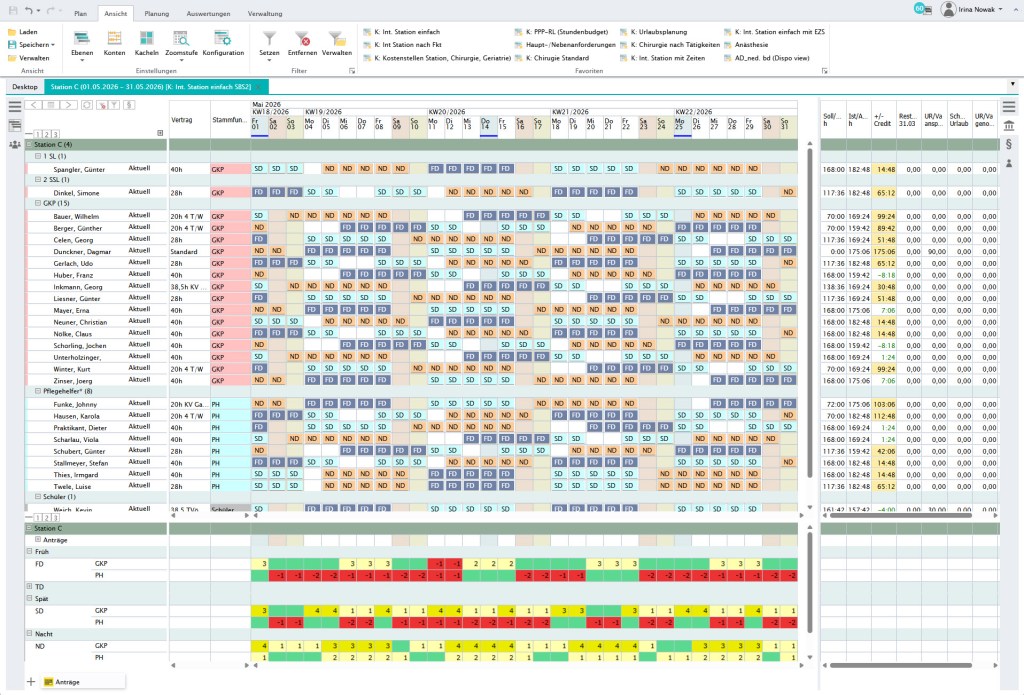
Manufacturing
Manufacturing businesses, often with a high degree of automation, use rotating shift patterns to make the best use of production machinery.
Call Centers
Continuous availability, particularly in international customer service, makes rotating shifts a practical necessity. Transparency and flexibility are key for call centers seeking to manage call-volume peaks efficiently.
Public Sector
Public-facing work requires significant commitment, sometimes around the clock. The police, fire services and emergency services use standardized rotation systems to ensure they are continuously ready to respond.
Aviation
Flights arrive and depart every minute, making punctuality essential. Ground and flight crews benefit from fixed rotation rules that help ensure working hours are distributed as evenly as possible.
Implementing a Rotating Shift Schedule with plano
A rotating shift schedule is considered one of the most efficient shift models, especially in industries that operate continuously. However, introducing and managing one is complex. It requires precise planning as well as the flexibility to respond to unexpected changes. That’s where plano’s workforce management software comes in. It reduces administrative effort, lowers the risk of errors and improves employee satisfaction.
How Does plano WFM Help Businesses Implement a Rotating Shift Schedule?
- Automated creation of rotating shift schedules: plano WFM allows scheduling managers to store rotation patterns centrally. In just a few clicks, the software creates a transparent, automated shift schedule that takes the rotation cycle, legal requirements, and employee preferences into account. This helps prevent errors and avoid placing an unfair burden on individual employees.
- Flexibility at the touch of a button: plano WFM helps managers handle sudden changes efficiently, whether caused by sick leave or unexpected operational needs. The software immediately suggests suitable replacements based on availability, qualifications and workload. This makes it easier to keep employee rotations running smoothly.
- Employee self-services with myplano: Transparency and employee satisfaction are key to successful implementation. With the myplano app, employees can view their shifts, swap shifts or submit preferred shifts at any time. This level of autonomy improves acceptance of the shift schedule while also reducing the workload of the scheduling team.
- Data-driven insights for better workforce management: plano WFM gives businesses access to detailed analyses and insights into staffing needs and shift structures. In addition to AI-powered staffing level analysis, reports and dashboards help managers measure and review scheduling efficiency.
- Compliance with legal requirements: Shift scheduling is automated with relevant working time laws and collective bargaining agreements in mind. This helps plano support legally compliant operations and coordinated collaboration with works councils through clear, transparent planning processes.

Conclusion
Rotating shifts are much more than a way to schedule shifts. They foster team cohesion, efficiency and fairness in demanding work environments. However, rotating shift schedules also bring challenges, particularly when unexpected absences occur. plano WFM supports businesses with reliable staffing level analysis, automated shift schedule optimization and employee involvement. Get in touch to book a demo!
Archive
We’re Here for You
Have questions about our products?
We’re here to help.