Book demo

HR Trends 2026

HR Trends 2026: These 6 Topics Will Shape Tomorrow’s Human Resources

HR Trends 2026

A fruit basket, a height-adjustable desk, and one day of remote work per week.
What was considered a real perk just a few years ago barely excites anyone today. Yet, many companies still rely on these exact benefits when competing for talent. Don’t get us wrong, these benefits are by no means worthless. On the contrary, today they are part of the baseline standard rather than unique differentiators. 

In 2026, the working world looks different. 

Employees expect digital processes, genuine growth opportunities, and leaders who extend trust instead of exercising control. At the same time, Artificial Intelligence is transforming entire job profiles, the skilled labor shortage continues to worsen, and companies must position themselves more strongly than ever as attractive employers. 

Anyone who wants to attract and retain the right people in the future should be familiar with these six HR trends for 2026. 

Behind each of these trends lies one core question: How do companies create a work environment where people enjoy working and choose to stay long-term? 

Modern Workforce Management (WFM) solutions provide many of the answers. They create transparency, promote flexibility, unburden managers in their day-to-day work, and enhance the Employee Experience from day one. 

Content

Quick Check: What Are the Key HR Trends for 2026?

The most critical HR trends for 2026 include the increasing use of Artificial Intelligence in human resources, skills-based hiring, continuous upskilling and training, a positive Employee Experience, authentic employer branding, and a leadership culture rooted in trust rather than control. 

However, current practice still lags behind ambition: According to McKinsey & Company, operative AI solutions are currently used in only 28 percent of HR processes. At the same time, roughly one-third of employees did not invest a single hour in continuing education over the past year. 

At the same time, workers primarily crave reliability: According to The Stepstone Group, 77 percent of employees would prioritize job security over career advancement. Employers who offer stability, transparency, and trust gain a real competitive edge. Together, these developments show how modern HR management is becoming more digital, more agile, and simultaneously more human

HR-Trend   What Is It About?    Significance for Companies 
Artificial Intelligence  Automation and data-driven decision-making in HR  Greater efficiency and relief in day-to-day operations 
Skills-based Hiring   Focusing on competencies rather than strictly on degrees  Larger talent pool and better role-fit 
Continuous Upskilling  Ongoing skill and competency development  Higher employee retention and future-proofing 
Employee Experience   Positive touchpoints across the entire employee journey  Higher job satisfaction and lower turnover 
Employer Branding   A visible and authentic employer brand  Increased attractiveness to candidates 
Trust-based Leadership  Greater autonomy and clearer guidance  Increased attractiveness to candidates 

AI is Not Just Changing Jobs. It is Changing HR Itself.

How is Artificial Intelligence Transforming Human Resources in 2026?

In 2026, AI ranks among the most impactful HR trends. While many companies previously used AI solely for isolated tasks, it is now reshaping entire workflows and processes across human resources. 

This is not about replacing people. On the contrary, when used deliberately, AI can make HR work even more human. When repetitive and time-consuming tasks are automated, HR professionals gain more time for what truly matters: the people within the organization. 

Today, AI already assists with recruiting, writing job descriptions, applicant tracking, and people analytics. In workforce scheduling, it also helps evaluate data faster, identify staffing needs early on, and make more informed decisions. 

What Does This Mean for Companies?

Deploying AI in HR requires more than just the right technology. Qualified and trained employees, transparent processes, and a clear strategy are equally essential. Organizations that establish these foundations early can reduce the operational burden on HR teams while elevating the quality of their HR services. 

What Do Statistics Say?

According to a global study by Gartner, over 76% of HR leaders stated that organizations will fall behind if they do not deeply integrate AI into their HR processes in the very near future, particularly to drive efficiency and enable data-driven decision-making. 

How plano WFM Supports You: 

plano WFM leverages intelligent algorithms for staff planning. Historical data, seasonal fluctuations, and real-time trends feed into an accurate demand forecast. The software generates automated shift schedule proposals that account for labor laws, collective bargaining agreements, and individual employee preferences alike. This saves HR managers hours of manual scheduling and minimizes costly planning errors. 

Gartner-Image-Girl-bilk-skills management

More Room for Real Skills Alongside the Traditional Resume

Why Skills and Growth Potential Make the Difference Today

Diplomas, academic degrees, and proven work experience remain a valuable foundation in 2026. However, in a rapidly evolving work environment, reviewing resumes alone is often no longer enough to capture a person’s full potential. 

An increasing number of successful businesses are taking a more holistic approach: What practical strengths does a candidate bring? How effectively do they solve complex problems? How quickly do they acquire new knowledge? 

In this competency-oriented approach, frequently referred to as skills-based hiring, the goal is not to devalue formal qualifications, but rather to broaden the evaluation criteria. Alongside traditional degrees, practical experience, motivation, and a willingness to learn are finally given equal weight. This creates fair opportunities for qualified career changers and vastly expands the talent pool for employers. 

A Look at the Numbers 

A global study by Deloitte proves that this broader perspective delivers measurable benefits: Companies that systematically focus on the actual skills of their employees fill open positions with a 107% higher success rate. At the same time, they are 98% more successful at retaining top performers over the long term. 

What Does This Mean for Companies?

HR managers can design job profiles with far greater flexibility. When formal requirements and demonstrated practical skills count equally, both university-trained specialists and seasoned practitioners can find the exact role where their strengths deliver the greatest impact.

answer mark

How plano WFM Supports You:

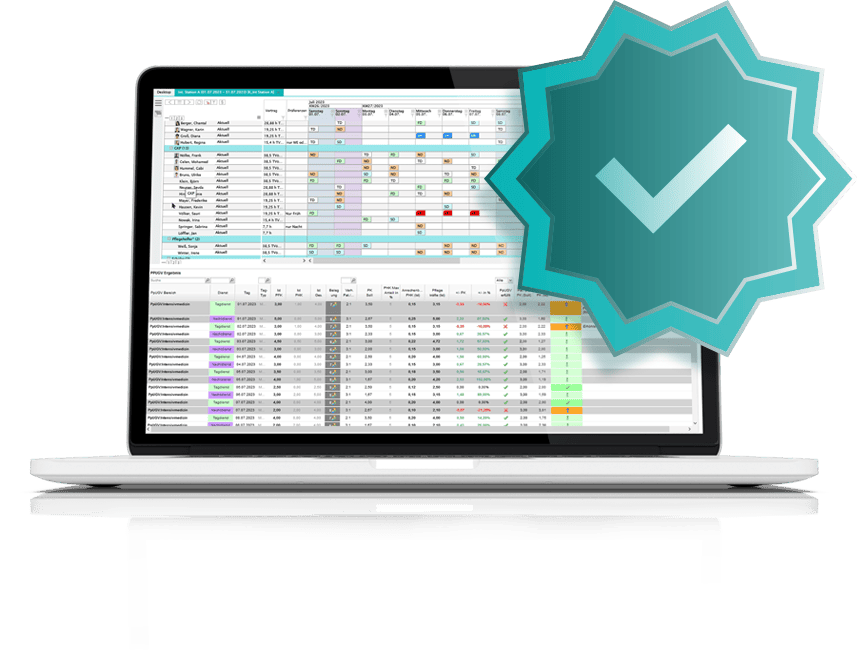
Individual skills deliver value in day-to-day operations only when they are transparent during scheduling. With plano’s qualification management module, organizations store all employee certifications, degrees, language proficiencies, and practical experience in one central hub. 

During scheduling, the software matches shift requirements with stored employee profiles in seconds. Shifts are assigned based on actual required competencies rather than rigid job titles. This guarantees high operational quality on the floor and fosters genuine employee appreciation, as staff members are deployed according to their specific skill sets. 

Upskilling Becomes the New Employee Retention

Why is Professional Development Growing in Importance for Employee Retention?

Employees want to grow. Those who see no future at their current company often start looking elsewhere much faster. 

For this reason, companies are investing heavily in training programs, digital learning platforms, and individualized development paths. Competencies surrounding digitalization, Artificial Intelligence, communication, and leadership are in especially high demand. 

Upskilling is no longer treated as a one-off event; it has evolved into a continuous process that accompanies employees across varying tasks, roles, and career stages. 

This also means that professional growth does not always have to lead to a traditional management track. Specialist career paths, project-based responsibilities, and targeted skill acquisition provide equally compelling opportunities. 

What Does This Mean for Companies?

Training should not follow a one-size-fits-all approach. What matters most are programs tailored to employees’ skills, responsibilities, and individual development goals. Regular 1-on-1 check-ins and transparent career pathways create a vital foundation for this. 

What Do the Statistics Say?

The LinkedIn Workplace Learning Report has consistently revealed a clear trend: 94% of employees would stay longer at a company if it actively invested in their professional learning and upskilling. 

How plano WFM Supports You:

In day-to-day operations, training often falls through due to scheduling conflicts: Who covers for the employee during the session? Which certifications expire soon? The seminar and training management module in plano WFM seamlessly integrates professional development into staff planning. It automatically alerts you to expiring licenses (e.g., safety certifications, first aid) and schedules training sessions so that no staffing shortages occur on the floor. 

Macbook Roster Skillmanagement

The Battle for Talent is Won Through Employee Experience

What Defines a Great Employee Experience?

Winning and retaining talent today requires more than a competitive salary and standard perks. One of the top HR trends for 2026 is the growing significance of the Employee Experience (EX). 

Employee Experience encompasses every interaction an employee has with a company—starting from the initial touchpoint in the application process, through onboarding, to day-to-day workflows and personal career development. 

Employees expect digital, straightforward, and flexible workflows that are just as intuitive as the consumer apps they use in their private lives. 

Whether requesting time off, setting availability, viewing schedules, swapping shifts, or communicating with the team: information and features must be fast, transparent, and mobile-accessible. This is precisely where digital HR solutions, employee apps, and workforce management systems step in. They streamline processes, cut down on administrative inquiries, and empower employees with greater autonomy. 

What Does This Mean for Companies?

To truly elevate the Employee Experience, companies must align daily operations more closely with their overall strategy: 

  • Realign priorities: Small, everyday improvements often have a greater impact than sweeping cultural initiatives because they provide immediate relief in daily work. 
  • Digitize and simplify processes: Making schedules and information accessible at all times while creating simple communication channels instantly boosts satisfaction. 
  • Automate with purpose: Delegate repetitive tasks to smart tools so HR and leadership have more time for personalized support. 
  • Involve employees: Solicit feedback regularly to ensure that changes address actual needs. 
  • Empower leaders: Equip managers with the tools and skills to model great EX in daily operations. 
  • Measure and adapt: Track relevant metrics such as eNPS, processing times, or app adoption rates, and adjust initiatives based on data. 
  • Respect legal and ethical standards: Ensure data privacy and transparency when using AI and digital tools to protect employee trust. 

Combining pragmatic everyday tools with strategic vision enables both quick wins and long-term cultural transformation. 

What Do Statistics Say?

According to Gallup, companies with highly engaged employees achieve 23% higher profitability. In addition, employee turnover is 21% to 51% lower, depending on the industry and organizational context, compared with companies that have lower levels of employee engagement. 

How plano WFM Supports You:

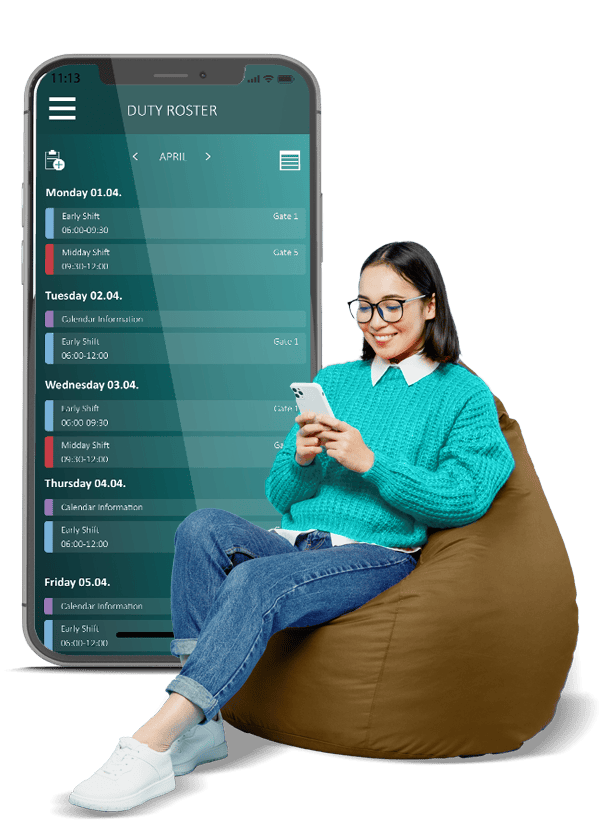
With the myplano employee app, staff carry their work life right in their pocket: view shift schedules in real time, submit vacation requests in two clicks, track work hours on mobile, or swap shifts effortlessly with coworkers. This transparency and speed foster genuine satisfaction, reduce administrative back-and-forth for HR, and demonstrate that your company operates at the highest modern standard.

A woman with myplano on the smartphone in the background, screenshot of the myplano software.

Employer Branding Becomes Mandatory

Being a good employer is no longer enough; companies must deliver on their promises in daily practice. 

Glossy brochures and polished marketing copy on career pages convince almost no one today. Candidates thoroughly research companies on employer review platforms like Kununu (or Glassdoor) long before applying. What matters there is unvarnished reality: What is team morale really like? Are employees constantly asked to cover shifts on their days off, or is scheduling reliable? An authentic employer brand is built when the promise in the job ad matches reality on the job. 

What Do Statistics Say? 

Data from leading review platform Kununu tells a clear story: Well over 70 percent of job seekers consult reviews from current and former employees before applying. More than two-thirds of candidates abandon an application process entirely if reviews portray a poor leadership culture and challenging working conditions. Lack of scheduling reliability, unfair work hours, and poor work-life balance consistently top the list of grievances. 

What Does This Mean for Companies?

The best recruitment asset is satisfied employees who recommend their employer on platforms like Kununu out of genuine conviction. Modern HR work must therefore ensure that daily work is fair, predictable, and transparent. 

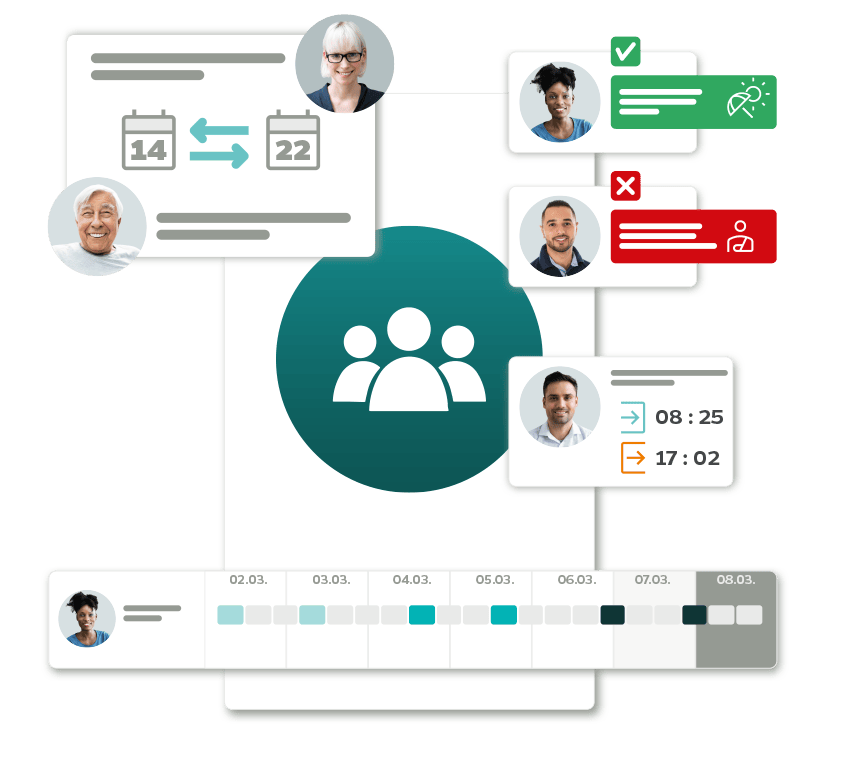
Grafische Darstellung der Funktionen von myplano mit Kommen-Gehen-Buchungen, Diensttausch und anderen Features

How plano WFM Supports You:

plano translates your employer value proposition directly into practice, generating the positive reviews you need for successful recruiting: 

  • Daily reliability: Thanks to ergonomic and early scheduling, employees know their shifts well in advance. This protects their personal lives and eliminates frustration over last-minute shift changes. 
  • Fair working conditions: The software ensures that workloads, unpopular shifts, and weekend duties are distributed fairly across the team. 
  • Full transparency: Digital time accounts give every employee a precise, up-to-the-minute overview of hours worked and remaining vacation balances. 

When shift schedules are dependable and overtime chaos is a thing of the past, employees feel genuinely valued. The result: motivated teams and stellar reviews on platforms like Kununu that naturally attract new talent. 

Less Control, More Trust

How is Leadership Evolving in 2026?

Today’s teams frequently work flexibly, across multiple locations, and digitally. Simultaneously, employees expect more personal responsibility, transparency, and trust. 

However, many leaders feel increasing pressure due to these shifts. Gartner continues to identify leadership development as one of the top priorities for HR executives worldwide. 

In 2026, successful leadership means less micromanagement and more guidance. 

Organizations need leaders who: 

  • Actively guide change 
  • Support and mentor employees 
  • Strengthen team communication 
  • Build trust 
  • Navigate teams through uncertainty 

“New Work” is no longer viewed as a temporary initiative, but as a permanent adaptation to a new operational reality. Exceptional leadership is becoming the deciding factor for motivation, productivity, and retention. 

What Does This Mean for Companies?

Organizations must not leave managers to handle this responsibility alone. Training, appropriate digital tools, and clear decision-making frameworks help make leadership simpler and more impactful in daily operations. 

What Do Statistics Say?

According to research by the Harvard Business Review, companies with a high-trust culture experience 50% higher productivity, 74% less workplace stress, and 40% fewer burnout cases compared to strictly control-driven organizations. 

How is Leadership Evolving in 2026?

Today’s teams frequently work flexibly, across multiple locations, and digitally. Simultaneously, employees expect more personal responsibility, transparency, and trust. 

However, many leaders feel increasing pressure due to these shifts. Gartner continues to identify leadership development as one of the top priorities for HR executives worldwide. 

In 2026, successful leadership means less micromanagement and more guidance. Organizations need leaders who: 

  • Actively guide change 
  • Support and mentor employees 
  • Strengthen team communication 
  • Build trust 
  • Navigate teams through uncertainty 

“New Work” is no longer viewed as a temporary initiative, but as a permanent adaptation to a new operational reality. Exceptional leadership is becoming the deciding factor for motivation, productivity, and retention. 

What Does This Mean for Companies? 

Organizations must not leave managers to handle this responsibility alone. Training, appropriate digital tools, and clear decision-making frameworks help make leadership simpler and more impactful in daily operations. 

What Do Statistics Say?

According to research by the Harvard Business Review, companies with a high-trust culture experience 50% higher productivity, 74% less workplace stress, and 40% fewer burnout cases compared to strictly control-driven organizations. 

myplano Software auf Smartphone und Desktop

Successfully Implementing HR Trends 2026 with plano WFM

Most HR trends for 2026 share a common denominator: Digitalization. 

Companies need solutions that alleviate employee workloads, streamline processes, and deliver a modern Employee Experience. In labor-intensive sectors in particular, many competing demands must be balanced: on one hand, employees seek greater flexibility, transparency, and co-determination; on the other, businesses must guarantee that qualified personnel are available at the right place and time. 

This is precisely where modern Workforce Management comes into play. 

With plano WFM, companies establish a digital foundation for streamlined, transparent, and employee-centric processes: 

  • Digital and transparent shift scheduling 
  • Demand-driven workforce management 
  • Mobile employee app (myplano) for on-demand access 
  • Simple in-app shift swapping 
  • Digital time-off and absence workflows 
  • Accelerated communication between employer and staff 
  • Enhanced flexibility and employee autonomy 
  • Reduced workload for managers and HR teams 
  • Data-driven planning for optimized efficiency 

This enables companies to translate core trends—such as Employee Experience, retention, digitalization, and modern leadership – directly into everyday practice. 

Employees gain full visibility over their work hours, can submit requests digitally, and take an active role in shaping their schedules. Managers, in turn, cut down manual planning efforts, avoid unnecessary inquiries, and secure a reliable data foundation for decision-making. 

The HR trends for 2026 demonstrate: Successful human resources management thrives at the intersection of modern technology and human needs. 

While workforce management software cannot solve every HR challenge, it creates the essential conditions for transparent processes, more quality time between managers and their teams, and greater flexibility for staff. Companies that embrace these trends early not only boost their employer brand, but also build the foundation for long-term retention, streamlined workflows, and future-proof HR management. 

With plano WFM, many of the HR trends for 2026 can be put into practice today.

Book Demo

Carolin Holstein, Marketing & PR, plano solutions gmbh

Carolin Holstein

Marketing & PR

Carolin Holstein manages the editorial content of this blog and works in the Marketing/PR field. With her clear, audience-oriented language, she presents complex topics in a comprehensible and practical manner. Through her regular creation of editorial content, she has built extensive knowledge in workforce management, combining marketing expertise with professional depth.

Would you like to learn more about workforce management?

For more information, please click here:  

→ https://plano-wfm.com 

We’re Here for You

Have questions about our products?
We’re here to help.
Frau macht ein Herz mit ihren Händen

Contact

 Let's get in touch and discuss your ideas.

"*" indicates required fields

This field is for validation purposes and should be left unchanged.
Name*
E-Mail*

Please fill in all fields marked with * before submitting the form.

Great to have you here

Work with us to find the best solution for your company too.
Make an appointment now for a free, no-obligation product demo.

Great that you want to meet us

Register now for our roadshow in your area.

Great that you want to meet us

Register now for the plano Campus. Please register each participant individually and with their own email address!

Great to have you here

Work with us to find the best solution for your company too.
Make an appointment now for a free, no-obligation product demo.

"*" indicates required fields

This field is for validation purposes and should be left unchanged.
Name*
E-Mail*

Please fill in all fields marked with * before submitting the form.